One job should be enough.
$18 is $12 an hour short of about $30.
About $37,500 vs $62,500 a year ·
$18 on Jan 1, 2028 under Act 114 (2022), Hawaiʻi DLIR. Yearly = hourly × 2,080 hours, rounded to the nearest $500 ($37,440 and $62,400).
Three measures of need, per working parent
- $22.81
- DBEDT self-sufficiency, 2024
- ~$30
- ALICE, 2027 (our estimate)
- $37.64
- MIT living wage, 2026
DBEDT, Self-Sufficiency Income Standard (Dec 2025), state average for two adults, a preschooler and a school-age child, $94,889 a year, split over two full-time earners (our calc). ALICE, United For ALICE 2026 Household Survival Budget for two adults, an infant and a preschooler, adjusted to 2027 with DBEDT’s price forecast, $29.92 each (our estimate). MIT Living Wage Calculator, two working adults with two children.
~$30 is above Hawaiʻi’s median wage ($27.08, BLS May 2025). It measures what a family needs. How fast to get there is the Legislature’s call.
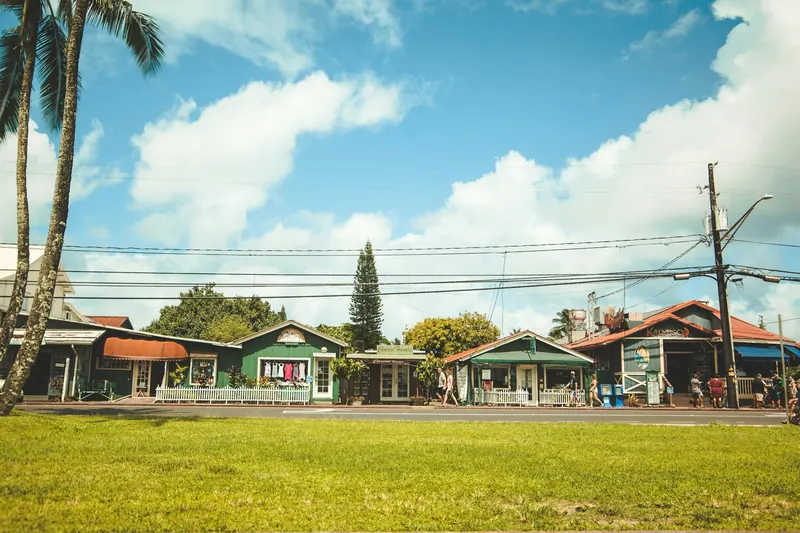
Photo · Dustin Belt / Unsplash, Kauaʻi.
The basics, month by month
What a living wage pays for.
A living wage covers the basics and nothing more, with nothing set aside for savings. Here’s the monthly budget behind each number, at 2027 prices.
$24 an hour
One adult working full time
- Housing$1,890
- Food$710
- Taxes$710
- Getting around$350
- Health care$120
- Phone plan$120
- A 10% cushion for everything else$320
Every month$4,220
About $50,500 a year. At the $18 minimum in 2028, a full-time job brings in $3,120 a month.
$30 an hour
Each of two parents working full time, with an infant and a preschooler
- Housing$2,650
- Child care$2,010
- Food$1,940
- Taxes$1,230
- Health care$780
- Getting around$770
- Phone plan$160
- A 10% cushion for everything else$830
Every month$10,370
About $124,500 a year. At the $18 minimum in 2028, both jobs bring in $6,240 a month.
The bars use the same scale, so you can compare. For the family, child care costs about as much as food. Taxes are in the budget because a paycheck pays them.
Source: United For ALICE, Household Survival Budget, Hawaiʻi 2026 (2024 costs), carried to 2027 (our estimate)
Sources +
United For ALICE, State of ALICE in Hawaiʻi 2026, Household Survival Budget, state figures at 2024 costs: one adult $45,804 a year; two adults with an infant and a preschooler $112,704 a year. ALICE counts housing, child care, food, transportation, health care, a smartphone plan, taxes and a 10% cushion for other costs.
Our estimate carries each cost to 2027 with DBEDT’s Honolulu price forecast (× 1.10435), rounded to $10. Hourly = yearly ÷ 2,080 hours (40 a week × 52): one adult $50,584 ÷ 2,080 = $24.32; the family $124,465 ÷ 2 parents ÷ 2,080 = $29.92. These numbers measure need. They are not in any bill.
Nearly half of Hawaiʻi homes can’t cover the basics.
of households, 2024
Each dark window is a home that falls short. 11 of 25.
Sources: United For ALICE 2026 (2024 data)
Sources
United For ALICE, State of ALICE in Hawaiʻi 2026 (2024 data): 44% of Hawaiʻi households are below the ALICE line. ALICE line = the Household Survival Budget for each household type (housing, child care, food, transportation, health care, a smartphone plan, taxes), plus households in poverty. 44% shown as 11 dark homes of 25 (our calc). Illustration, not a real street.
Most of Hawaiʻi’s lowest-paid workers are grown adults.
About 8 in 10 are 25 or older.
25 or older, 81%
16 to 24, 19%
Workers earning $22 an hour or less · DBEDT, ACS 2023 data
Sources
DBEDT, The Minimum Wage in Hawaiʻi, 2025 Update, Table E-1 (ACS 2023 data). Workers earning $22 an hour or less: 81% are 25 or older; 19% are 16 to 24 (our calc, 100 − 81). Slippers are an illustration (10 slippers, 8 and 2).
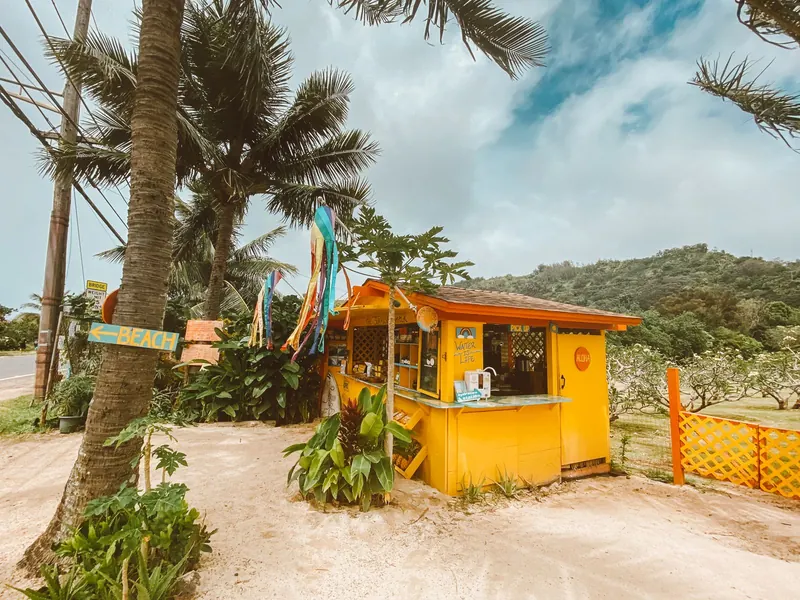
Photo · Jess Loiterton / Pexels, a roadside stand on Oʻahu’s North Shore
A living wage adds $25,000 a year for each parent.
Two parents working full time, with an infant and a preschooler. From the $18 minimum (2028) to $30.
Source · Hawaiʻi DLIR; United For ALICE family budget (our 2027 estimate); our calculation, rounded to $500
Sources
$18 is Hawaiʻi’s minimum wage from January 1, 2028, the last raise in current law (Hawaiʻi DLIR, Act 114 of 2022). $30 is a living wage for each of two full-time working parents with an infant and a preschooler: our 2027 estimate from the United For ALICE family budget ($112,704 at 2024 costs), carried to 2027 with DBEDT’s Honolulu price forecast = about $124,500 a year, or $29.92 an hour each.
Exact math (our calculation): $30 − $18 = $12 more an hour. $12 × 2,080 hours (40 a week × 52) = $24,960 more a year for each parent, shown as $25,000. × 2 parents = $49,920 more a year for the family ($74,880 → $124,800), shown as $50,000. Before taxes. Amounts on the chart are rounded to the nearest $500.
Basic family budget: United For ALICE Household Survival Budget for two adults, an infant and a preschooler in Hawaiʻi ($112,704 at 2024 costs), carried to 2027 with DBEDT’s Honolulu price forecast = about $124,465 a year (our estimate). $124,800 − $124,465 = about $335 to spare, shown as about $300. The budget covers housing, child care, food, transportation, health care, a phone plan and taxes, with nothing for savings.
Updated Nov 11, 2026.
Pay rose faster than prices. Let’s finish the job.
Since the raises began, our minimum wage rose 58%. Prices rose about as fast here as nationally (+21% vs +20%).
Jan 2022 to Sept 2026 · Hawaiʻi DLIR · BLS consumer prices, Urban Hawaiʻi and U.S. · our calculation
Sources
Minimum wage: Hawaiʻi DLIR and Act 114 (2022): $10.10 in Jan 2022, $12 on Oct 1, 2022, $14 on Jan 1, 2024, $16 on Jan 1, 2026. $16 ÷ $10.10 = 1.584, up 58%.
Prices: U.S. Bureau of Labor Statistics, Consumer Price Index for All Urban Consumers (CPI-U), all items, not seasonally adjusted. Urban Hawaiʻi (CUURS49FSA0, every two months): January 2022 = 304.988; September 2026 = 368.586. 368.586 ÷ 304.988 = 1.209, up 21%. U.S. city average (CUUR0000SA0, monthly): January 2022 = 281.148; September 2026 = 336.940. 336.940 ÷ 281.148 = 1.198, up 20%. October 2025 was not published (federal shutdown), so the U.S. line skips that month.
$12 short: a living wage for working parents is about $30 an hour, our 2027 estimate from United For ALICE; $30 − $18 = $12 (our calculation). The dashed line marks ~$30 on the same scale: $30 ÷ $10.10 = 2.97, or 197% above the January 2022 minimum wage (our calculation).
This shows what happened to pay and prices over this period, not what caused it.
Updated Nov 11, 2026.
And still, $18 in 2028 leaves working parents $12 an hour short.
Worried about jobs?
Unemployment fell here, rose nationally.
Sept 2022 vs. Sept 2026, since the raises began.
The state’s own 2025 study (DBEDT) found past raises had “little impact on employment outcomes.” It saw a small post-pandemic dip in restaurant and bar jobs, cause unclear.
Source · BLS, seasonally adjusted. Sept 2026 is preliminary. DBEDT, 2025.
Sources
BLS Local Area Unemployment Statistics (Hawaiʻi, series LASST150000000000003) and Current Population Survey (U.S., LNS14000000), monthly, seasonally adjusted. September 2022 is the month before the minimum wage rose to $12; September 2026 is the latest month for Hawaiʻi. Hawaiʻi 3.3% → 2.8% (down 0.5 points). U.S. 3.5% → 4.2% (up 0.7 points). In between, Hawaiʻi fell to a low of 2.1% (August–September 2025) and has risen since; it was below the U.S. in all 48 months with data (no October 2025 figure, federal shutdown). Hawaiʻi’s September 2026 figure is preliminary, and BLS revises these numbers each spring. This shows what happened since the raises began, not what caused it.
DBEDT, The Minimum Wage in Hawaiʻi, 2025 Update (August 2025), executive summary, p. iii: its regressions “suggest that prior minimum wage increases had little impact on employment outcomes while generally increasing income and wages.” The same page says restaurant and bar (“Food Services and Drinking Places”) jobs in Honolulu “slightly decreased in the post-pandemic period,” more so statewide and on Maui, and that it is unclear how much is due to minimum wage increases versus tourism’s recovery from COVID-19 and the Maui wildfires.
Updated Nov 11, 2026.
Since the raises began, low-wage industries kept adding jobs.
Jobs in Hawaiʻi’s 10 lowest-paying industries.
early 2026
Source · BLS Quarterly Census of Employment and Wages, Jan–Mar 2022 vs 2026
Sources
BLS Quarterly Census of Employment and Wages, Hawaiʻi private jobs, average for January–March 2022 and January–March 2026. The 10 lowest-paying industries (food service, retail, child care and others, ranked by early-2022 weekly pay; about a quarter of private jobs) went from 124,330 to 133,679 jobs: +9,349, up 7.5% (our calculation from the BLS files). Over these years Hawaiʻi’s minimum wage rose from $10.10 to $16, and it reaches $18 in 2028. Jobs and raises happened together; this does not show that one caused the other. In early 2022, Hawaiʻi jobs were still recovering from the 2020 shutdown.
Minimum wage: Hawaiʻi DLIR.
Updated Nov 11, 2026.
Since the raises began, Hawaiʻi kept pace.
GDP per person, after inflation 2022 to mid-2026
Jobs at small workplaces (under 50 staff) March 2022 to 2026
BEA real GDP per person, 2017 dollars, through June 2026 (our estimate) · BLS QCEW, private jobs by workplace size
Sources
The U.S. was slightly ahead on both measures: GDP per person +7.0% vs +6.9% in Hawaiʻi, and small-workplace jobs +3.2% vs +3.0%.
GDP per person (our estimate): real GDP, millions of chained 2017 dollars, seasonally adjusted (BEA SQGDP1, released Sept 30, 2026; newest is Apr–Jun 2026), ÷ population. 2022 = average of 2022’s four quarters ÷ 2022 midyear population (BEA/Census). Latest = average of the four quarters Jul 2025–Jun 2026 ÷ population at Jan 1, 2026, which we estimate from Census July 2025 figures plus half of the past year’s change.
Hawaiʻi 87,871.8 ÷ 1,437,812 = $61,115 (2022); 93,535.1 ÷ 1,431,754 = $65,329, up 6.9%. U.S. 22,079,726 ÷ 333,996,304 = $66,108; 24,230,209.8 ÷ 342,675,387 = $70,709, up 7.0%. Other reasonable population choices give Hawaiʻi +6.8% to +7.0%, U.S. +6.7% to +7.2%.
Hawaiʻi’s population fell slightly, which lifts per-person numbers; the whole economy grew 6.4% (U.S. 9.7%). Growth has slowed lately: Apr–Jun 2026 was up 0.7% from a year earlier (U.S. up 2.2%).
Small workplaces: BLS Quarterly Census of Employment and Wages, first-quarter size-class data, private, workplaces with under 50 employees, March jobs. Hawaiʻi 249,204 (2022) → 256,722 (2026), up 3.0% (peak 257,880 in 2023). U.S. 56,115,199 → 57,903,375, up 3.2%. About half of Hawaiʻi’s private jobs (256,722 of 519,111 in 2026).
QCEW counts workplaces (each store or office), not companies, and sorts them by each March’s staff. Small workplaces with 5–49 staff: 15,257 → 15,528 (up 1.8%; U.S. up 2.6%).
Minimum wage (Hawaiʻi DLIR): $10.10 until $12 on Oct 1, 2022; $14 on Jan 1, 2024; $16 on Jan 1, 2026.
This shows what happened as the raises took effect, not what caused it.
Updated Nov 11, 2026.
Dozens of cities and states will have a higher minimum wage than Hawaiʻi.
Even counting their own prices. Hawaiʻi’s $18 minimum in 2028 buys only $16.37 worth.
Minimum wage in 2028, adjusted for local prices (our estimate)
More than HawaiʻiSource · State and city labor departments; BEA 2024 price levels; CBO inflation forecast. 2028 wages are our estimates except Portland, Santa Fe and Rhode Island (our calculation).
Sources
Each place’s minimum wage on Jan 1, 2028, the day Hawaiʻi reaches $18, divided by its 2024 price level (BEA Regional Price Parity, U.S. = 100; metro areas for cities, states for states). Where the wage rises with prices each year and the 2028 rate isn’t set yet, our estimate is the latest announced rate × 1.024, CBO’s forecast of 2027 inflation (Jan 2026, consumer prices, Q4 to Q4). Recent yearly raises in these places ran about 2.7–4.0%, so the estimates are likely low. Places that raise each July (D.C., Chicago, Los Angeles, San Francisco) raise again in July 2028. Yearly = the after-prices hourly figure × 2,080 hours (our calculation).
| Place | Wage, Jan 1, 2028 | ÷ Price level | = At U.S.-average prices | A year |
|---|---|---|---|---|
| Seattle, WA$22.14 in 2027 × 1.024 (our estimate) | $22.67 | 111.133Seattle metro | $20.40 | $42,432 |
| Flagstaff, AZ$18.95 in 2027 × 1.024 (our estimate) | $19.40 | 100.325Flagstaff metro | $19.34 | $40,227 |
| Denver, CO$19.84 in 2027 × 1.024 (our estimate) | $20.32 | 105.782Denver metro | $19.21 | $39,957 |
| Mountain View, CA$20.25 in 2027 × 1.024 (our estimate) | $20.74 | 110.423San Jose metro | $18.78 | $39,062 |
| Portland, ME$19.00 set in law for Jan 1, 2028 | $19.00 | 101.858Portland, ME metro | $18.65 | $38,792 |
| Santa Fe, NM$17.50 from Jan 1, 2027; next change Mar 1, 2028 (kept) | $17.50 | 98.767Santa Fe metro | $17.72 | $36,858 |
| Boulder, CO$18.17 in 2027 × 1.024 (our estimate) | $18.61 | 105.202Boulder metro | $17.69 | $36,795 |
| San Francisco, CA$19.61 from Jul 1, 2026 × 1.024 = July 2027 rate (our estimate) | $20.08 | 115.613San Francisco metro | $17.37 | $36,130 |
| Connecticut$17.48 in 2027 × 1.024 (our estimate) | $17.90 | 103.610Connecticut | $17.28 | $35,942 |
| Washington, D.C.$18.40 from Jul 1, 2026 × 1.024 = July 2027 rate (our estimate) | $18.84 | 109.901D.C. | $17.14 | $35,651 |
| Washington State$17.73 in 2027 × 1.024 (our estimate) | $18.16 | 107.013Washington | $16.97 | $35,298 |
| Chicago, IL$17.05 from Jul 1, 2026 × 1.024 = July 2027 rate (our estimate) | $17.46 | 103.595Chicago metro | $16.85 | $35,048 |
| Minneapolis, MN$17.02 in 2027 × 1.024 (our estimate) | $17.43 | 104.822Minneapolis metro | $16.63 | $34,590 |
| Rhode Island$17.00 in 2027; no 2028 raise set (kept) | $17.00 | 102.280Rhode Island | $16.62 | $34,570 |
| Los Angeles, CA$18.42 from Jul 1, 2026 × 1.024 = July 2027 rate (our estimate) | $18.86 | 113.566Los Angeles metro | $16.61 | $34,549 |
| Hawaiʻi$18.00 set in law for Jan 1, 2028 | $18.00 | 109.951Hawaiʻi | $16.37 | $34,050 |
Also above $16.37, not shown: Edgewater, CO $20.79 · Burien, WA $20.72 · Tukwila, WA $20.69 · Renton, WA $20.52 · King County, WA (unincorporated) $19.88 · Everett, WA $19.83 · Bellingham, WA $19.55 · West Hollywood, CA $18.88 · Sunnyvale, CA $18.59 · Emeryville, CA $18.02 · San Jose, CA $17.62 · Boulder County, CO $16.97 · Montgomery County, MD $16.93.
“Dozens”: the 15 charted plus these 13 make 28 places we checked that clear $16.37, so at least two dozen. Most 2028 wages are our estimates (see above), and there are likely more places we did not check.
Close but below: Portland, OR metro $16.32 · California (state) $16.09 · Vermont $15.59 · New Jersey $15.51 · New York City area $15.47. Using Honolulu’s metro price level (110.961) instead of the state’s would put Hawaiʻi at $16.22.
Wages: Washington L&I; Seattle Office of Labor Standards; Denver Labor; City of Boulder; City of Santa Fe; Connecticut Governor; Rhode Island law H5029/S0125; D.C. DOES; City of Flagstaff (via AZFamily); Mountain View (via ADP); Portland, ME 2025 ballot measure (via Bloomberg Tax, Fisher Phillips); San Francisco, Los Angeles and Chicago July 2026 rates (via Littler, ABC7); Minneapolis (via FOX 9). Prices: BEA Regional Price Parities (MARPP and SARPP, 2024). Inflation: CBO, Jan 2026.
Updated Nov 11, 2026.
The bill
The 2027 session opens January 20.
We’ll post the bill here as soon as it’s introduced.
- NowJoin so we can reach you.
- January 20The session opens. Bills get numbers.
- Committee hearingsYour testimony counts most here.
- House and Senate votes
- The governor signs it

What you can do
Three ways to help, in two minutes or less.

Work here. Live here.
Let’s raise Hawaiʻi’s minimum wage to a living wage.
We’ll tell you when the bill moves, when hearings happen and who to call.
Mahalo, you’re in.
Tell us a little more, so we can reach you on hearing days. All optional.
Now pass it on.
We couldn’t save your sign-up just now. Please try again later, or email info@livingwagehawaii.com.
One job should be enough. $18 is $12 short of a living wage.
Follow @livingwagehi